Gross lease vs. modified gross lease: meaning, math, and examples
What a gross lease and a modified gross lease mean, how full-service gross differs, and one suite priced every way so you can see who pays when costs rise.
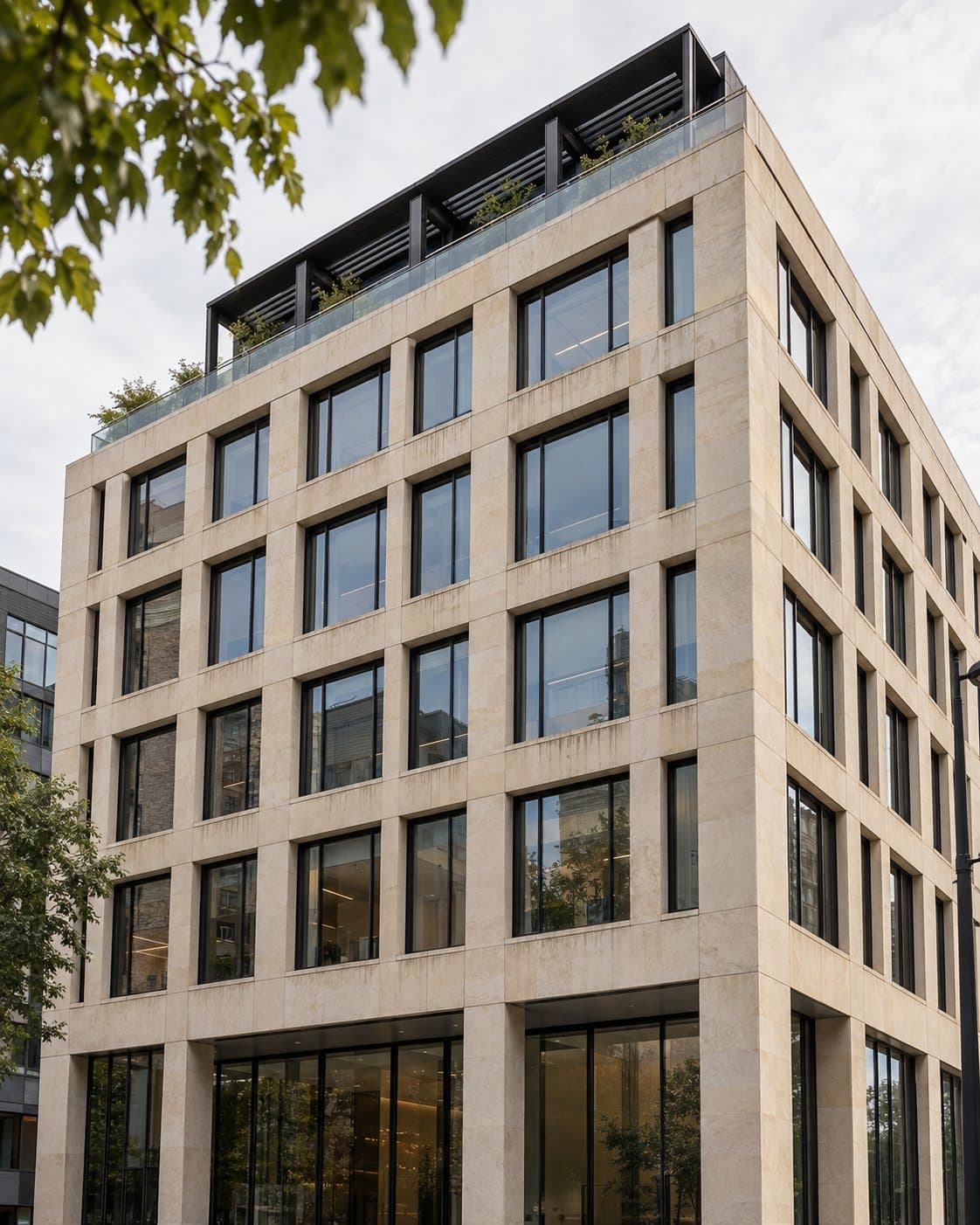
A gross lease is a commercial lease where the tenant pays one rent and the landlord pays the building's operating costs, such as property taxes, insurance, and maintenance, out of that rent. A modified gross lease is a middle ground: the rent still covers some operating costs, but the tenant also pays certain others, like its own utilities, janitorial, or its share of cost increases above a base year. The labels sound tidy. The leases are not, because “modified” can mean almost anything two parties agreed to. This guide defines each version, prices one suite every way, and shows where the real differences appear: in year two, when costs go up.
01 / 08
Gross lease, in one paragraph
In a gross lease the tenant writes one check. The landlord takes that rent and pays the building's bills: real estate taxes, building insurance, common area maintenance, and often utilities and janitorial. The tenant does not see those costs and, in a pure gross lease, does not pay more when they rise.
That makes a gross lease easy to budget for a tenant and risky for a landlord. If the county reassesses or the insurance renewal jumps 20%, the landlord's profit shrinks and the tenant's rent stays the same. Because nobody likes absorbing inflation for five years, pure gross leases are less common than the name suggests. Most real gross leases carry a base year or an expense stop that passes increases back to the tenant.
Key points
- Tenant pays: one rent, sometimes plus its own electricity
- Landlord pays: taxes, insurance, maintenance, often utilities and janitorial
- Who carries cost increases: the landlord, unless the lease has a base year or stop
- Where you see it: multi-tenant office, small shops, some flex space
02 / 08
Full-service gross: the all-inclusive version
A full-service gross lease, often shortened to FSG or “full service,” is the most inclusive gross lease. The rent covers the building's operating costs plus the services that make an office usable: utilities, janitorial, trash, common-area upkeep, and often building security. Class A and Class B multi-tenant office buildings quote this way because tenants are comparing all-in costs between buildings.
Almost every full-service lease includes a base year. The landlord's costs in the first lease year become the baseline, and in later years the tenant pays its share of any increase above that baseline. The base year versus expense stop guide covers that clause in detail, including how a stop differs from a base year and why the choice of base year matters.
03 / 08
Modified gross lease meaning: some costs in, some costs out
A modified gross lease, sometimes called a modified net lease, starts from a gross rent and then carves something out. There is no standard definition. In one market it means the tenant pays its own utilities and janitorial. In another it means a gross rent with a base year for taxes and insurance. In a third it means the tenant reimburses CAM but not taxes. The only reliable definition is the list of costs the lease says the tenant pays.
That flexibility is the appeal. A modified gross lease lets the parties split costs along the lines that make sense for the building: the landlord keeps the costs it controls, and the tenant pays the costs it controls, such as how much electricity it uses. It is common in multi-tenant office, medical office, and smaller industrial and flex buildings.
Key points
- Tenant pays its own suite utilities and janitorial; landlord pays the building
- Gross rent plus the tenant's share of increases above a base year
- Gross rent plus a CAM reimbursement, with taxes and insurance in the rent
- Gross rent plus taxes, with the landlord keeping insurance and maintenance
04 / 08
The gross lease family, side by side
The NNN vs. gross vs. modified gross guide compares the whole spectrum from gross to triple net. Here is the gross end of it in more detail, including industrial gross, a variant that trips people up because it sounds like a gross lease but often behaves like a net one.
| Lease type | Tenant pays on top of rent | Increases go to | Typical property |
|---|---|---|---|
| Gross (pure) | Nothing, or its own electricity | Landlord | Small shops, short-term space |
| Full-service gross | Usually nothing in year one | Tenant, above a base year | Multi-tenant office |
| Gross with expense stop | Its share of costs above a fixed dollar stop | Tenant, above the stop | Office, older buildings |
| Modified gross | Whatever the lease carves out, often utilities and janitorial | Depends on the clause | Office, medical, flex |
| Industrial gross | Often utilities, janitorial, and some maintenance | Depends on the clause | Warehouse, light industrial |
05 / 08
A worked example: one suite, four leases, year one
Take a fictional 3,000 square foot office suite in a 30,000 square foot building, so the tenant's share is 10%. The building's taxes, insurance, and CAM total $150,000 a year, so the suite's share is $15,000. The suite's own electricity and janitorial cost $9,000 a year. Here is the same suite leased four ways, priced so that year one costs the tenant the same.
Full-service gross at $30 per square foot is $90,000 a year, or $7,500 a month, and the landlord pays everything, including the suite's electricity and janitorial. The base year is year one.
Modified gross at $27 per square foot is $81,000 a year, or $6,750 a month. The tenant also pays its own electricity and janitorial directly, $9,000 a year ($750 a month), for $90,000 in total. The rent covers taxes, insurance, and CAM, with a base year for increases.
A pure gross lease with no base year at $30 per square foot is also $90,000. For comparison, a triple-net lease at $22 per square foot is $66,000 of base rent ($5,500 a month), plus the $15,000 share of the nets, plus the $9,000 of suite costs, for $90,000 again.
Four labels, one number. The headline rent per square foot ranges from $22 to $30, but the tenant's total cost is $90,000 in every case. That is the first lesson of lease types: never compare a gross quote with a net quote by the headline alone.
Key points
- Full-service gross: $30 × 3,000 = $90,000
- Modified gross: $27 × 3,000 = $81,000 + $9,000 suite costs = $90,000
- Pure gross: $30 × 3,000 = $90,000
- Triple net: $22 × 3,000 = $66,000 + $15,000 nets + $9,000 suite costs = $90,000
06 / 08
Year two: where the lease types split apart
Now suppose every cost rises 10% in year two. The building's taxes, insurance, and CAM go from $150,000 to $165,000, so the suite's share rises by $1,500 to $16,500. The suite's electricity and janitorial go from $9,000 to $9,900, up $900. Assume each base-year clause covers taxes, insurance, and CAM only.
The pure gross tenant still pays $90,000; the landlord absorbs the whole $2,400 increase. The full-service tenant pays its $1,500 share of the building increase above the base year, for $91,500; the landlord absorbs the $900 utility and janitorial increase. The modified gross tenant pays $81,000 in rent, plus $1,500 above the base year, plus $9,900 for its own utilities, for $92,400. The triple-net tenant pays $66,000 in rent, plus $16,500 in nets, plus $9,900, also $92,400.
Notice that the modified gross tenant with a base year and the triple-net tenant land on the same number when costs rise. The difference shows up when costs fall. If the building's costs drop 10% to $135,000, the triple-net tenant's share falls to $13,500 and it saves $1,500. The modified gross tenant usually pays the same rent, because a base year passes increases through, not decreases, unless the lease says otherwise.
| Lease | Year one | Year two | Change for the tenant | Landlord absorbs |
|---|---|---|---|---|
| Pure gross | $90,000 | $90,000 | $0 | $2,400 |
| Full-service gross, base year | $90,000 | $91,500 | +$1,500 | $900 |
| Modified gross, base year | $90,000 | $92,400 | +$2,400 | $0 |
| Triple net | $90,000 | $92,400 | +$2,400 | $0 |
07 / 08
Gross vs. modified gross: which fits a small landlord?
For a small owner, a pure gross lease is a bet that costs will stay flat for the length of the lease. That works for a one- or two-year lease in a building with stable taxes. Over five years it rarely does. If you want the simplicity of one rent, a gross lease with a base year protects you from inflation while keeping the tenant's bill predictable.
A modified gross lease suits buildings where the tenant controls a real cost. If each suite has its own electric meter, there is no reason for the landlord to pay for a tenant's space heaters. Carve the utilities out, keep the building costs in the rent, and add a base year. Tenants get a simple rent, and the landlord stops subsidizing heavy users.
The trade-off is paperwork. A pure gross lease needs almost none. A base year needs the base year's actual costs on file and an annual statement of increases. A modified gross lease needs a clear list of exactly what the tenant pays, recorded somewhere you will find it in three years.
08 / 08
Clauses to check in any gross or modified gross lease
Before you sign or quote a gross or modified gross lease, check these items. This is general information, not legal advice, and the signed lease controls.
Key points
- Exactly which costs are included in the rent and which the tenant pays
- Whether there is a base year or expense stop, and the base year's actual amount
- Whether variable costs are grossed up for vacancy in the base year
- Who pays utilities, and whether suites are separately metered
- What “building standard” services include, and the after-hours HVAC rate
- Whether decreases below the base year are credited to the tenant
- How and when the landlord delivers the annual statement of increases
FAQ
Frequently asked questions
What is a gross lease?
A gross lease is a commercial lease where the tenant pays one rent and the landlord pays the building's operating costs, such as property taxes, insurance, and maintenance, out of that rent. Many gross leases add a base year or expense stop so the tenant pays its share of later cost increases.
What does modified gross lease mean?
A modified gross lease is a gross lease with some costs carved out. The rent covers part of the building's operating costs, and the tenant pays others, often its own utilities and janitorial or its share of increases above a base year. There is no standard definition, so the lease's list of tenant-paid costs is the definition.
What is a full service gross lease?
A full-service gross lease is the most inclusive gross lease. The rent covers taxes, insurance, maintenance, utilities, and janitorial, and it usually includes a base year so the tenant pays its share of increases in later years. It is common in multi-tenant office buildings.
What is the difference between a gross lease and a modified gross lease?
In a gross lease the landlord pays essentially all operating costs from the rent. In a modified gross lease the landlord pays some and the tenant pays others. The split varies by lease, so compare the lists of costs, not the labels.
Who pays utilities in a modified gross lease?
Often the tenant pays its own suite utilities, especially when the suite is separately metered, while the landlord pays common-area utilities. That is a common pattern, not a rule; the lease decides.
Who pays property taxes in a gross lease?
The landlord, out of the rent. If the lease has a base year or expense stop, the tenant pays its share of tax increases above the base amount.
Is a gross lease better for tenants?
A gross lease is easier to budget because the rent is fixed, and a pure gross lease shields the tenant from cost increases. But landlords price that risk into the rent, so the headline rent is higher than a comparable net lease. The total cost over the term is what matters.
Is modified gross the same as modified net?
The terms are often used interchangeably for a lease that falls between gross and net. Because neither has a fixed definition, read which costs the tenant pays rather than relying on the name.
What is an industrial gross lease?
An industrial gross lease is a variant used for warehouse and light industrial space. The rent usually covers taxes and insurance, while the tenant pays utilities, janitorial, and some maintenance. Like modified gross, its meaning depends on the lease.
How do I compare a gross lease quote with an NNN quote?
Convert both to a total annual cost. Add the NNN base rent, the estimated nets, and any costs the tenant pays directly, then compare that with the gross rent plus anything the gross lease excludes. The free commercial lease calculator does this conversion.
Free checklists
Get the lease abstraction and renewal checklists
The fields to pull from every lease, the renewal steps to calendar, and a rent roll template to keep the results in one place.
- Commercial Lease Abstraction ChecklistPrintable checklist
- Commercial Lease Renewal Checklist for LandlordsPrintable checklist
- Commercial rent roll templateSpreadsheet template
Put it into practice
TenantPoint doesn't calculate base-year or expense-stop increases; it keeps each lease's type, rent schedule, and documents in Commercial lease management software and CAM reconciliation software. See all TenantPoint solutions or how it compares with other software.
Sources
Where the numbers come from
This educational material is not legal, accounting, tax, or investment advice. Review controlling lease language and consult qualified professionals when appropriate.
Back to resources